
Local bronze orange bug advice for Hunter Region gardeners, from your Newcastle pest controller
Citrus trees are a favourite in Newcastle, Lake Macquarie and Maitland backyards, with fragrant spring blossom and plenty of lemons, limes and oranges to follow. They also attract one of our most unpleasant garden pests: the Bronze Orange Bug (Musgraveia sulciventris), often called the “stink bug”. The Spined Citrus Bug (Biprorulus bibax) is a similar citrus-feeding stink bug that causes comparable damage.
Both bugs drain sap from your tree, but the Bronze Orange Bug has a second trick. When threatened, it squirts a caustic liquid that can cause painful eye injuries and skin burns. Knowing how to recognise the bug, what damage to look for and how to deal with it safely protects both your harvest and your health.
What you will learn in this post
- How to recognise each stage of the bug’s life cycle
- The damage it does to leaves, shoots and fruit
- The safety gear you need before going near an infested tree
- Safe DIY control methods, and when to call a professional
Life Cycle and Identification
Early identification makes control far easier. The bug goes through five nymph stages (instars) before becoming an adult, and its appearance changes a lot along the way.
Scroll the table sideways on smaller screens — the life stage column stays put.
| Life stage | Typical season | What to look for | Behaviour and location |
|---|---|---|---|
| Eggs | Late winter to spring | Clusters of about 14 pale green, round eggs (~2.5 mm) | Laid on the undersides of leaves |
| Early nymphs | Spring | Small, translucent pale green | Huddle near the egg cluster. Well camouflaged and easy to miss |
| Late nymphs | Spring to summer | Bright orange to red with a dark spot on the back; larger with each moult | Active. Move onto young shoots, flower buds and developing fruit |
| Adults | Late summer onwards | Bronze to black, shield-shaped, about 25 mm long | Feed heavily, then shelter in the tree over winter and mate again in spring |
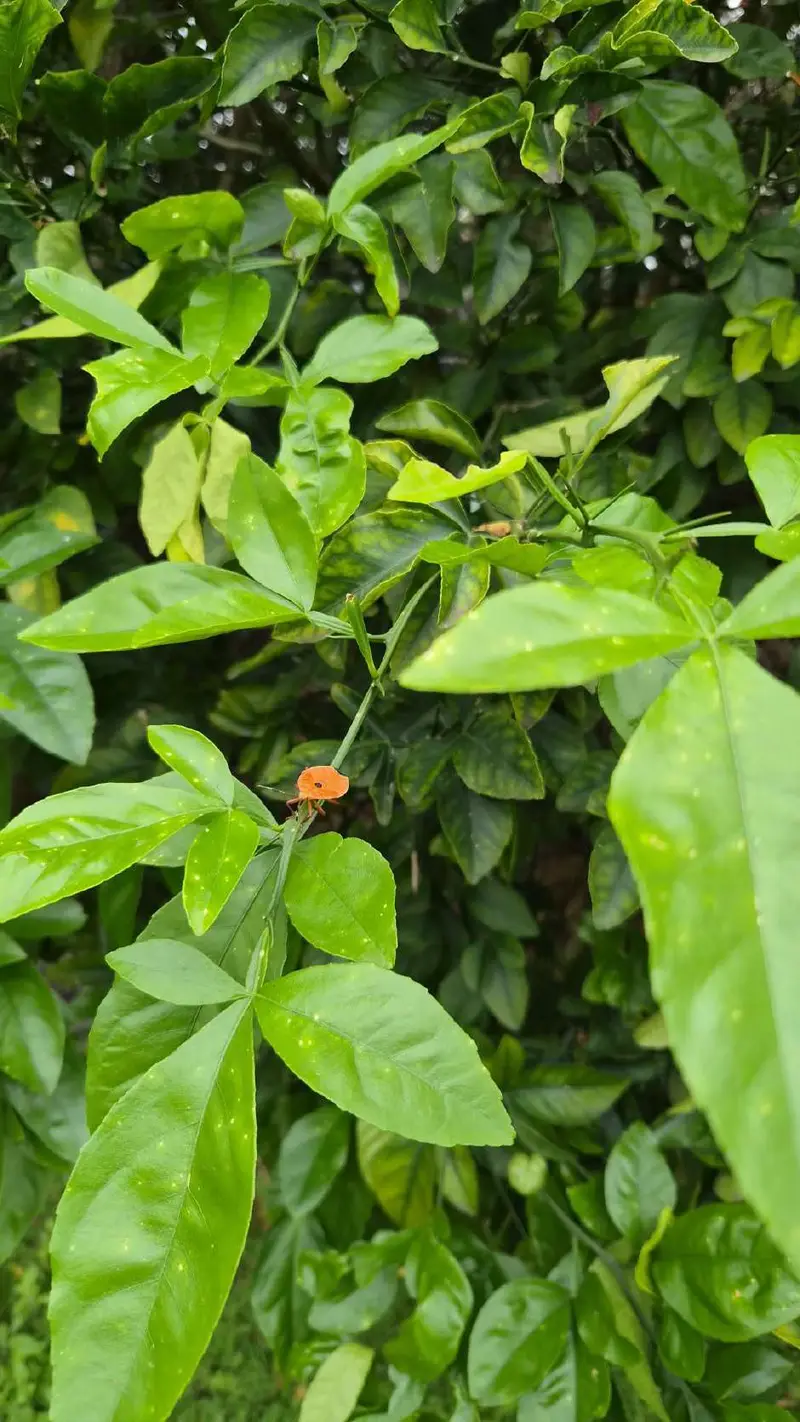
The first green nymphs appear in late winter and blend in perfectly with fresh foliage, so many gardeners only notice them once they moult into their bright orange stage in spring. By late summer they have matured into heavy-bodied bronze-black adults that give off a sharp, pungent smell when disturbed.
Check now: if you have citrus trees, spring is the best time to inspect. Look along new growth, stems and the undersides of leaves for orange nymphs and green egg clusters.
Spotting the signs
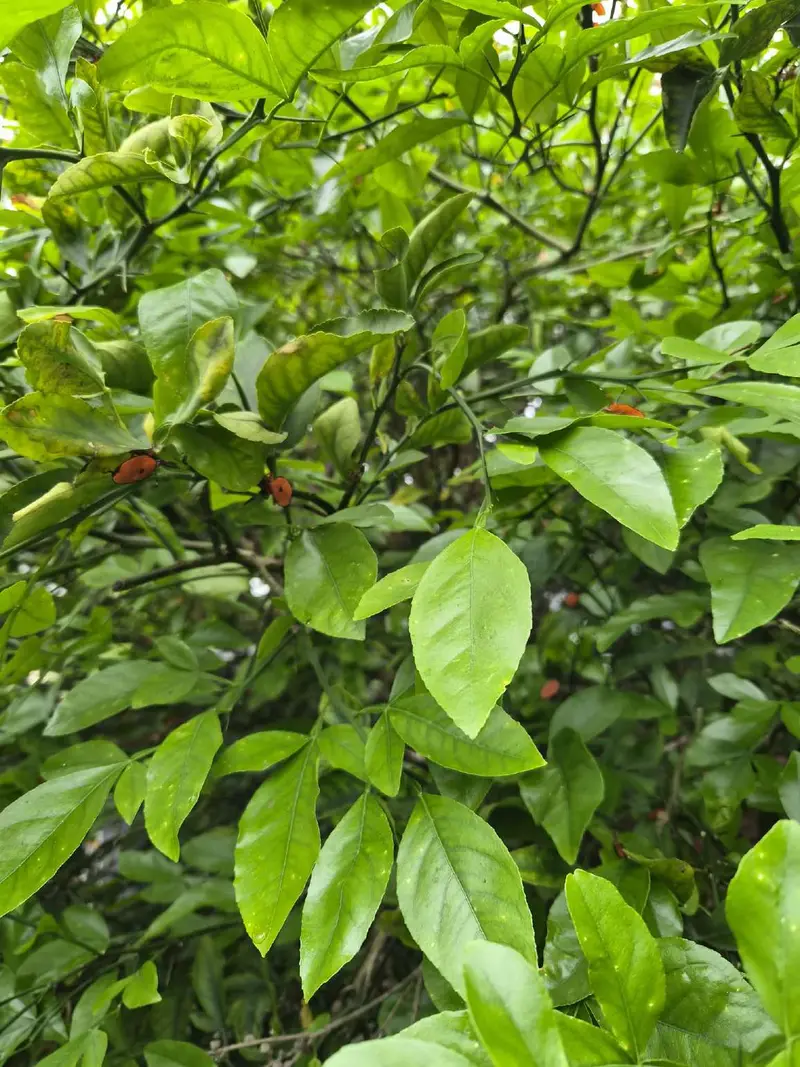
The photo shows several orange nymphs sitting on stems. Their colour stands out against the green leaves, but they are often tucked in beside branches, so look closely.
The Damage They Cause
Bronze Orange Bugs feed only on plant sap through piercing, sucking mouthparts. They go for the softest, most nutrient-rich tissue: new leaf growth, flower buds and young fruit. An unmanaged infestation can lead to:
- Wilting and dieback. Constant sap loss starves new growth, so young shoots blacken, wither and die back.
- Yellowing leaves and early leaf drop. Stressed leaves yellow, develop dead patches where the bugs have fed and drop early, weakening the tree’s ability to photosynthesise.
- Fruit loss. Feeding on young fruit stalks makes small fruit fall before it matures. Fruit that survives is often scarred or pitted and has poorer juice.
Left alone, repeat infestations year after year can stunt a tree, reduce its vigour and cut harvests sharply.
SAFETY WARNING FOR DIYers
Never crush, shake or spray Bronze Orange Bugs at close range without full protective gear. Adults and late-stage nymphs can squirt a fine jet of caustic liquid up to about half a metre. It is a mix of volatile chemicals designed to deter predators.
Eyes: direct contact causes immediate, severe pain and inflammation, and can temporarily impair vision. Without prompt flushing, corneal damage can occur.
Skin: the liquid stings, then leaves brown stains that can take weeks to fade. Prolonged contact can cause blistering.
First aid: if spray gets in your eyes, flush with clean running water for at least 15 minutes and seek medical help. For advice, call the Poisons Information Centre on 13 11 26. In an emergency, call 000.
Protective equipment you need
- Eyes: a full face shield or tight-fitting safety goggles. Ordinary glasses do not protect from the side.
- Hands: thick, chemical-resistant or heavy rubber gloves.
- Body: long sleeves in a dense fabric, long trousers and closed-toe shoes or rubber boots.
Safe DIY Control Methods
For a light infestation on a small or easy-to-reach tree, these non-chemical options can work. Wear full protective gear for all of them.
1. Drop them into soapy water
Half-fill a wide bucket with warm water and a good squirt of dishwashing liquid. Hold it directly under the infested branch and tap the branch gently with a stick. The bugs fall into the water, where the soap breaks the surface tension and drowns them before they can spray.
2. Vacuum them off
A shop vacuum with a little soapy water in the canister can lift bugs off branches. Take great care when emptying it, and wear full protective gear while you do.
3. Horticultural soaps and oils
Potassium soap sprays or botanical and pest oils (such as neem) can be applied to the small, soft-bodied green nymphs from late winter into spring. They work by smothering the nymphs. Oils are much less effective on hardened adults, and should not be applied on days above 30°C because they can burn foliage.
When to Call Green Top Pest Management
Hand removal suits small trees with few bugs. Mature trees and widespread outbreaks are a different story: reaching the upper canopy with a hand pump sprayer is difficult, and spray drift can fall back onto the person spraying. A professional service means:
- Targeted treatment. Products and methods chosen for the job, applied by a licensed technician with care around beneficial insects such as bees.
- Full canopy coverage. Professional equipment reaches the top of mature trees safely and evenly.
- Right timing. We know when treatment works best, so we can act on nymphs before they grow into adults.
- Protecting your harvest. Stopping sap loss early in the season protects blossom and fruit set.
Bronze Orange Bug Control in Newcastle, Lake Macquarie and Maitland
Bronze orange bugs are a regular problem on backyard citrus across Newcastle, Lake Macquarie (Lake Mac) and Maitland, and spring is when infestations ramp up. Green Top Pest Management is a local, licensed pest controller based in Cameron Park, providing citrus bug control and general pest management throughout Newcastle, Lake Macquarie, Maitland and the wider Hunter Region.
Citrus bug help for your suburb: Cardiff Heights, Hamilton, Cardiff, Toronto, Cameron Park, Warners Bay, Kurri Kurri and Gillieston Heights. See our local page for your suburb, or the Lake Macquarie service area.
Bronze orange bugs on your citrus in Newcastle, Lake Macquarie or Maitland?
If you are seeing wilting shoots, fallen fruit or orange and bronze bugs on your trees, get in touch before the problem grows. We service Newcastle, Lake Macquarie, Maitland and surrounding Hunter areas.
Call: 02 4963 2274
Book an inspection: greentoppest.com.au